Almost three months on from the launch of the European Central Bank's quantitative easing programme, new research from the Grant Thornton International Business Report (IBR) reveals a jump in business optimism in the eurozone in the first quarter of 2015, with confidence moving back up towards pre-crisis levels.
Companies are increasingly focused on high-quality strategic transactions, with less time spent on investigating peripheral opportunities, according to our International Business Report (IBR), a survey of 5,400+ business leaders in 35 economies.
Francesca Lagerberg explains why we continue to call for greater gender diversity in business and explains how our 2015 report - The path to leadership - adds to the debate.
Our 2015 women in business report looks at how to facilitate the career paths of women into senior management and offers 12 recommendations to society, government, businesses and women themselves about how to better support female advancement.
Rob McGillen, global head of technology at Grant Thornton, asks how important ICT infrastructure to business growth prospects and which economies are performing best.
Drawing on 10,000 interviews with company leaders and international forecast data, this report considers the outlook for the global economy and what this means for business growth prospects in 2015.
New research from the Grant Thornton International Business Report (IBR) reveals that while business confidence in 2014 climbed to levels not seen since before the financial crisis, a recent spate of uncertainty is weighing on growth prospects for the year ahead.
Real estate and construction is probably not the first sector that comes to mind when you think about environmental sustainability. The construction process consumes large amounts of natural resources and energy, and can create significant waste. While the progress of development continues to add to our quality of life, the built environment is responsible for approximately two-fifths of global energy use and a third of carbon emissions. This means that, from design to demolition, the buildings in which we live, work and play have a huge impact on the environment.
Businesses in the world’s three biggest economies, the United States, China and Japan, are increasingly feeling the heat when it comes to recruiting skilled staff. Given that these countries together represent over a third of global output, a deficit of skilled staff could have a significant knock-on effect on economic growth not just in these economies but beyond.
Technology is at the cutting edge of efforts to make growth more sustainable. As the global population swells and more people move into higher consumption classes, the demand for food, for energy, for water, will all increase. But the resources our planet offers will not. Clearly the status quo is not sustainable.
Efficiency and cost savings are big business in hospitality and tourism. It's hard to think of another sector which was such an early adopter of environmentally-friendly business practices.
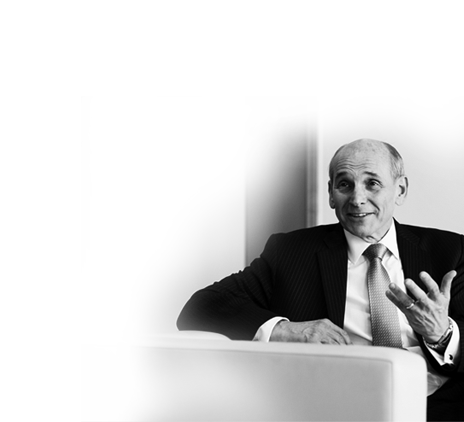
Ed Nusbaum, global CEO of Grant Thornton, discusses the Q3 global economic outlook and finds the slowdown in Germany threatening eurozone and world growth prospects.
With momentum building towards the UN Climate Change Conference in Peru, new figures from IBR reveal that businesses leaders in emerging markets are more focused on the sustainability of their operations compared with peers in developed markets.
Francesca Lagerberg, Global head of Tax services welcomes moves towards global taxation transparency.
The second quarter of 2014 brought a raft of very cheery economic news. The pace of growth in China kicked back up to 7.5% following a mini-stimulus from the government which included speeding up infrastructure project approvals, tax relief and credit easing. The United States roared back after a particularly bitter winter to post 4.0% growth (at the annual rate). Spain was buoyed by news that growth had accelerated to 0.6% (from the previous quarter) and the unemployment rate has started to fall.
Sustainability is a buzzword of the moment. Whether as business leaders or consumers, we cannot escape from being told to consider the long-term implications of our actions or spending decisions.