
• Skip to content
  • Skip to navigation
Global site
  • Insights
  • Services
    • Operational advisory
      • Operational advisory
      • Business consulting
      • Business risk services
      • Data analytics center
      • Asset management
      • Human capital advisory
      • Sustainability and ESG advisory
    • Transactional advisory
      • Transactional advisory
      • Recovery & reorganisation
      • Transactional advisory services
    • Cyber advisory
      • Cyber advisory
      • Cybersecurity
    • Forensic advisory
    • Assurance
      • Assurance
      • IFRS
      • Audit quality monitoring
      • Global audit technology
    • Legal & tax advisory
      • Legal & tax advisory
      • Legal advisory
      • Business process solutions
      • Tax advisory
  • Industries
    • Energy & natural resources
      • Energy & natural resources
      • Energy & environment
      • Oil & gas
      • Mining
    • Financial services
      • Financial services
      • Private equity
      • Asset management
    • Travel, tourism & leisure
    • Not for profit
    • Public sector
    • Real estate & construction
    • Technology
  • Meet our people
  • Careers
  • Locations
  • About us
Global site
  1. Home
  2. Insights
photograph of a woman reading a document

Read our insights, reports and more

Showing 16 of 66 content results
IFRS 9 hedge accounting
IFRS IFRS 9 hedge accounting
IAS 39 ‘Financial Instruments: Recognition and Measurement’, the previous Standard that dealt with hedge accounting, was heavily criticised for containing complex rules which either made it impossible for entities to use hedge accounting or, in some cases, simply put them off doing so.
Armen Hovhannisyan
Armen Hovhannisyan
| 01 Dec 2013
Global tax newsletter, issue 9
Tax Global tax newsletter, issue 9
Global tax newsletter is designed to keep you up to date with significant tax developments around the world that impact businesses with cross-border operations. It addresses issues of a global nature as well as domestic tax developments of interest to foreign investors. The newsletter aims to cover tax developments on a regional and international basis.
Anya Osipyan
Anya Osipyan
| 01 Nov 2013
Valuing intangibles under IFRS3
IFRS Valuing intangibles under IFRS3
This guide includes practical guidance on the detection of intangible assets in a business combination and also discusses the most common methods used in practice to estimate their fair value. It provides examples of intangible assets commonly found in business combinations and explains how they might be valued.
Armen Hovhannisyan
Armen Hovhannisyan
| 01 Nov 2013
Hunger for growth
Food & beverage Hunger for growth
The food and beverage industry is poised for growth around the globe. After years of uncertainty, retrenchment and delayed investments, industry executives are once again looking to invest in new products, new capacity, new distribution channels and new markets. Even in countries still shaking off the recession, executives expect growth and plan to capture market share at home and abroad.
01 Nov 2013
Transfer pricing
Tax Transfer pricing news, edition 4
Welcome to the fourth edition of Transfer Pricing News. This provides updates on transfer pricing developments from a number of countries across the globe – a necessity in the global economy we all now inhabit.
Anya Osipyan
Anya Osipyan
| 10 Oct 2013
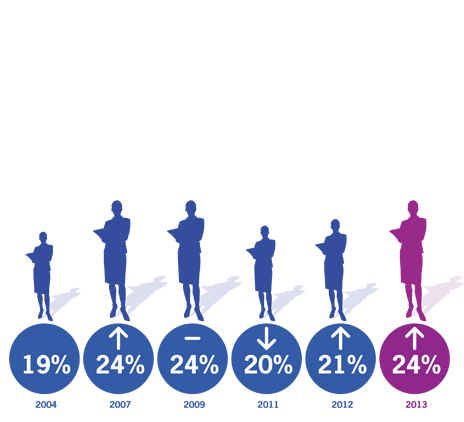
Women in senior management
International Business report (IBR) Women in senior management
Our International Business Report with insights gained from in-depth interviews with five senior female executives from around the world, this report looks at the role of education in improving female participation and how this can help boost business growth.
Anya Osipyan
Anya Osipyan
| 01 Oct 2013
Global private equity report
Private equity Global private equity report
Private equity firms around the world are adapting to a 'new fundraising road map', according to the Grant Thornton Global Private Equity Report 2013/14.
01 Oct 2013
How to rapidly scale operations and teams
Technology How to rapidly scale operations and teams
Scaling a tech business is like walking a burning tightrope. The faster you go, the more you risk falling off. But go too slowly and the rope will burn through.
Marine Musheghyan
Marine Musheghyan
| 01 Oct 2013
Tackling international markets
Technology Tackling international markets
Business-minded technologists have always planned for global business empires. It used to take decades before they could grow globally. Today, it can be more or less instantaneous – creating a new set of opportunities and threats.
Marine Musheghyan
Marine Musheghyan
| 01 Oct 2013
Ensuring compliance and data security
Technology Ensuring compliance and data security
For tech companies, the regulatory environment is tougher now than ever before. To protect national interests, governments are using compliance to restrict companies that could potentially disrupt established industries which can creating a knock on effect for tech companies. Rapidly expanding companies also face a wider range of individual regulations as they expand into new territories, be it employment law, taxation, product safety or licensing.
Marine Musheghyan
Marine Musheghyan
| 01 Oct 2013
Global Dynamism Index (GDI) 2013
Global Dynamism Index (GDI) Global Dynamism Index (GDI) 2013
These are the results of the Grant Thornton Global Dynamism Index (GDI) 2013, an annual research project designed by the Economist Intelligence Unit, which ranks the development of the business growth environments of 60 of the world's largest economies over the past 12 months.
17 Sep 2013
Expatriate tax newsletter, edition 7
Tax Expatriate tax newsletter, edition 7
Grant Thornton understands that multinational tax challenges are among the most complex and expensive issues facing companies with international operations. And expatriate tax issues are a key consideration for companies working across borders.
Anya Osipyan
Anya Osipyan
| 07 Jul 2013
Conflict resolution in transfer pricing
Transfer pricing Conflict resolution in transfer pricing
Advanced Pricing Agreements (APAs) are helping to alleviate the risk of double taxation. In turn, Mutual Agreement Procedures (MAPs) may offer a smoother path to conflict resolution. But neither is a panacea.
Anya Osipyan
Anya Osipyan
| 01 Jun 2013
Transfer pricing
Tax Transfer pricing news, edition 3
Welcome to the third edition of Transfer Pricing News. This provides updates on transfer pricing developments from a number of countries across the globe – a necessity in the global economy we all now inhabit.
Anya Osipyan
Anya Osipyan
| 03 Mar 2013
Liability or equity?
IFRS Liability or equity?
Classification of a financial instrument as either liability or as equity has an immediate and significant effect on an entity’s reported results and financial position. Liability classification for instance affects an entity’s gearing ratios and typically results in any payments being treated as interest and charged to earnings. This guide addresses the key application issues to consider and includes interpretational guidance in certain problematic areas.
Armen Hovhannisyan
Armen Hovhannisyan
| 01 Mar 2013
Expatriate tax ebook
Tax Expatriate tax ebook
This Expatriate tax ebook has been designed to provide an overview of the different tax systems around the globe and gives further information about tax systems and regulations in specific countries.
Anya Osipyan
Anya Osipyan
| 01 Jan 2013
Load more

CONNECT CONNECT

  • Contact us
  • Our people
  • Global reach

ABOUT ABOUT

  • About us
  • Careers
  • Events
  • Press

LEGAL LEGAL

  • Privacy
  • Cookie Preferences
  • Disclaimer
  • Site map

Follow usFollow us

© 2025 Grant Thornton Armenia - All rights reserved. "Grant Thornton” refers to the brand under which the Grant Thornton member firms provide assurance, tax and advisory services to their clients and/or refers to one or more member firms, as the context requires. Grant Thornton Armenia is a member firm of Grant Thornton International Ltd (GTIL). GTIL and the member firms are not a worldwide partnership. GTIL and each member firm is a separate legal entity. Services are delivered by the member firms. GTIL does not provide services to clients. GTIL and its member firms are not agents of, and do not obligate, one another and are not liable for one another’s acts or omissions.