This illustrative set of interim financial statements sets out good practice in the application of the presentation and disclosure requirements of IFRS for companies preparing condensed interim financial statements for a six month accounting period beginning on 1 January 2014. It reflects changes in IFRS that are effective for the year ending 31 December 2014.
Real estate and construction is probably not the first sector that comes to mind when you think about environmental sustainability. The construction process consumes large amounts of natural resources and energy, and can create significant waste. While the progress of development continues to add to our quality of life, the built environment is responsible for approximately two-fifths of global energy use and a third of carbon emissions. This means that, from design to demolition, the buildings in which we live, work and play have a huge impact on the environment.
Businesses in the world’s three biggest economies, the United States, China and Japan, are increasingly feeling the heat when it comes to recruiting skilled staff. Given that these countries together represent over a third of global output, a deficit of skilled staff could have a significant knock-on effect on economic growth not just in these economies but beyond.
Ed Nusbaum, global CEO of Grant Thornton, discusses the Q3 global economic outlook and finds the slowdown in Germany threatening eurozone and world growth prospects.
Recession, economic uncertainty, and market volatility have forced many miners out of the industry and brought others to the point of insolvency.
Over the last few years, ask an economist where to look for growth and the answer would usually be the emerging markets. Now, though, with renewed optimism in Japan the UK, and US , should we be looking to the developed economies for new opportunities?
Outsourcing remains widely utilized by businesses across both sides of the Atlantic. The UK is seeing increasing utilization of outsourcing services across a number of industries, including the IT, HR, tax, and finance and accounting (F&A) functions within companies. And a recent survey shows that this continues to be attractive to companies within the USA, UK and EU.
The Chinese economy is slowing. The days of rampant, double-digit expansion are in the past as we move away from massive investment and export dependency towards a more sustainable, consumption-driven model of growth. This rebalancing offers both challenges and opportunities for dynamic organisations. How these businesses adapt to the changing environment will be key to their growth prospects.
Scaling a tech business is like walking a burning tightrope. The faster you go, the more you risk falling off. But go too slowly and the rope will burn through.
Business-minded technologists have always planned for global business empires. It used to take decades before they could grow globally. Today, it can be more or less instantaneous – creating a new set of opportunities and threats.
For tech companies, the regulatory environment is tougher now than ever before. To protect national interests, governments are using compliance to restrict companies that could potentially disrupt established industries which can creating a knock on effect for tech companies. Rapidly expanding companies also face a wider range of individual regulations as they expand into new territories, be it employment law, taxation, product safety or licensing.
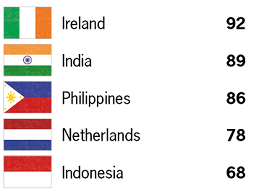
The US is the largest economy in the world and home to approximately 320 million people. Growth rates remain steady, albeit below pre-crisis levels, and job creation has been strong. Congressional dysfunction, particularly around tax reform is a major concern for business leaders while the strong dollar is weighing on exports. Below is our advice about expanding into the US and its ranking in the Global Dynamism Index 2015.
Mexico is the 15th largest economy in the world, the second largest in Latin America and has over 122 million inhabitants. Growth rates remain closely tied to those of its US neighbour and the destination for over 75% of exports. The government hopes that an ambitious programme of reform should boost long-term economic prospects. Read about doing business in Mexico and how it fared in the Global Dynamism Index 2015.
Classification of a financial instrument as either liability or as equity has an immediate and significant effect on an entity’s reported results and financial position. Liability classification for instance affects an entity’s gearing ratios and typically results in any payments being treated as interest and charged to earnings. This guide addresses the key application issues to consider and includes interpretational guidance in certain problematic areas.